


Can Someone Else Use Your Property? Easements Explained for Indiana and Kentucky Buyers
Posted: June 15, 2026
When someone buys a home, investment property, or commercial building, they usually focus on the obvious details: price, inspections, financing, taxes, and closing costs.
But one of the most important questions is often less obvious: 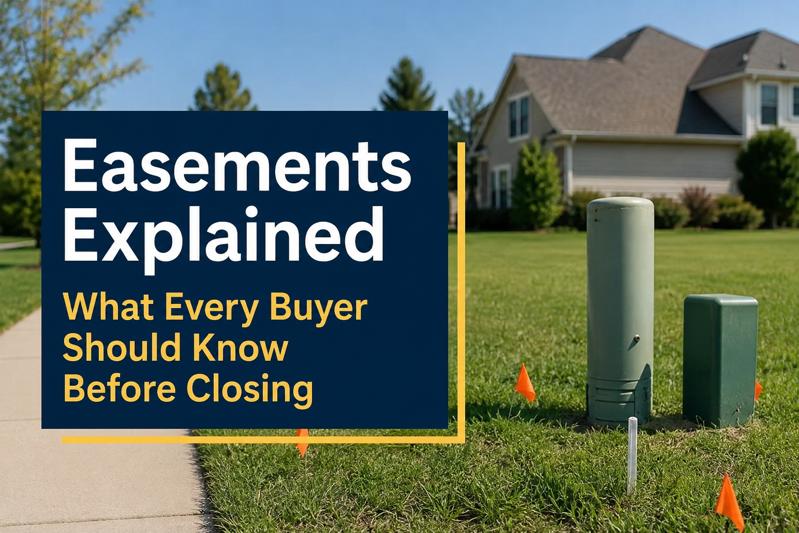
Can someone else legally use part of the property?
That question is where easements matter.
An easement can affect where a buyer may build, fence, park, landscape, expand, or access the property. In many cases, easements are normal and manageable. In other cases, they can create real limitations that buyers should understand before closing.
At Aristocrat Title, easements are one of the many recorded matters that may appear during the title search and title commitment process. For buyers, sellers, REALTORS®, lenders, builders, and investors throughout Southern Indiana and Greater Louisville, understanding easements early can help prevent confusion later.
What Is an Easement?
An easement is a legal right that allows someone else to use part of a property for a specific purpose, even though they do not own the property.
The property owner still owns the land. However, another party may have certain rights to use or access a portion of it.
Common examples include:
-
A utility company accessing power, gas, water, sewer, or fiber lines
-
A neighbor using a shared driveway
-
A municipality maintaining drainage improvements
-
A property owner crossing another parcel to reach their land
-
A developer preserving access, drainage, or utility rights within a subdivision
Easements are often recorded in public records and may appear in a title search, deed, plat, subdivision restriction, or separate recorded easement agreement.
For a broader explanation of how title issues are reviewed before closing, read Aristocrat Title’s guide: What Does Title Insurance Actually Cover?
https://www.aristocrattitle.com/news/142-what-does-title-insurance-actually-cover
Why Easements Matter Before Closing
Most easements do not stop a closing. Many are routine and expected.
However, buyers should still understand them because easements can affect future use of the property.
An easement may impact:
-
Fence placement
-
Pool installation
-
Detached garages
-
Driveway use
-
Landscaping
-
Parking
-
Drainage
-
Building additions
-
Commercial site planning
-
Future resale value
-
Access to land or improvements
The issue is not always whether the easement exists. The better question is: does the easement interfere with how the buyer plans to use the property?
That is why title review and due diligence matter.
Common Types of Easements
Utility Easements
Utility easements are among the most common easements found in residential and commercial real estate.
These may allow utility providers to install, inspect, maintain, repair, or replace:
-
Electric lines
-
Water lines
-
Sewer lines
-
Gas lines
-
Cable lines
-
Internet or fiber infrastructure
-
Stormwater systems
A buyer may own the land, but the utility provider may still have the right to access a portion of the property.
Before building a fence, pool, shed, garage, addition, or commercial improvement, property owners should confirm whether a utility easement affects that area.
Access Easements
An access easement gives someone the right to cross or use part of a property for access.
These are common with:
-
Shared driveways
-
Rural properties
-
Landlocked parcels
-
Commercial developments
-
Multi-parcel ownership arrangements
-
Properties with older access patterns
An access easement can remain in place even after the property is sold. Buyers should understand who has access rights, where access is located, and whether any maintenance obligations exist.
Drainage Easements
Drainage easements are used to manage stormwater and water flow.
These may appear in subdivisions, commercial developments, and properties with creeks, ditches, retention basins, or stormwater infrastructure.
Drainage easements can affect grading, landscaping, fencing, and future construction. A buyer should be careful before making improvements in any area reserved for drainage.
Shared Driveway Easements
Shared driveway easements are common throughout Southern Indiana and Greater Louisville.
They may define:
-
Who may use the driveway
-
Who maintains it
-
How repair costs are shared
-
Whether the driveway can be widened or changed
-
Whether parking is allowed
A shared driveway may be perfectly acceptable, but buyers should understand the arrangement before closing.
Conservation or Restrictive Easements
Some easements limit development to preserve farmland, wooded areas, historic features, drainage areas, or environmental resources.
These are especially important for buyers purchasing acreage, commercial sites, development ground, or investment property.
For investors and developers, easements should be reviewed as part of a broader due diligence process. Aristocrat Title covered that process in this commercial real estate guide:
https://www.aristocrattitle.com/news/143-the-jeffersonville-commercial-real-estate-due-diligence-checklist-15-things-every-investor-should-review-before-closing
Where Easements Show Up
Easements may be found in several places, including:
-
Deeds
-
Recorded plats
-
Subdivision restrictions
-
Utility agreements
-
Prior conveyances
-
Title commitments
-
Survey documents
-
Public records
A title search helps identify recorded matters that may affect ownership. A title commitment may list easements and other exceptions that should be reviewed before closing.
For buyers who want to better understand the title commitment process, Aristocrat Title’s guide is a helpful resource: Title Commitment Explained
https://www.aristocrattitle.com/news/113-title-commitment-explained-southern-indiana-louisville-guide
Can a Buyer Build on an Easement?
Sometimes, but not always.
The answer depends on:
-
The type of easement
-
The language of the recorded document
-
Local rules and ordinances
-
Utility or municipal requirements
-
The type of improvement being proposed
-
Whether the easement holder must approve the improvement
A buyer should never assume that a fence, pool, garage, sign, parking lot, building addition, or drainage change is allowed within an easement area.
Before making improvements, the buyer should review the recorded documents, consult the appropriate municipality or utility provider when needed, and seek legal advice if the easement language is unclear.
Easements and Residential Buyers
For residential buyers, easements usually become important when the buyer has a future plan for the property.
Examples include:
-
Adding a fence for a backyard
-
Installing a pool
-
Building a detached garage
-
Adding a driveway
-
Expanding a patio
-
Creating additional parking
-
Improving drainage
-
Buying a property with a shared driveway
-
Buying land or acreage
A buyer may love the property, but still needs to understand whether easements affect future plans.
For buyers preparing for closing, Aristocrat Title also offers this guide: Buying a Home in Louisville? What Buyers Should Know Before Closing
https://www.aristocrattitle.com/news/138-buying-a-home-in-louisville-what-buyers-should-know-before-closing-aristocrat-title
Easements and Commercial Real Estate
Easements can be even more important in commercial transactions.
For commercial buyers, developers, builders, and investors, easements may affect:
-
Site access
-
Parking requirements
-
Utility service
-
Future expansion
-
Drainage design
-
Building placement
-
Drive-through lanes
-
Signage
-
Cross-access rights
-
Shared maintenance obligations
A small easement can have a large impact on a commercial project. That is why commercial buyers should review easements early, not at the last minute before closing.
Aristocrat Title provides commercial title and escrow services throughout Southern Indiana and Greater Louisville, including Jeffersonville, New Albany, Sellersburg, Clarksville, Charlestown, Floyds Knobs, Corydon, Paoli, Salem, Scottsburg, Madison, Prospect, and Louisville.
What a Title Company Does
A title company helps identify recorded matters that may affect ownership.
That process may include reviewing:
-
Ownership history
-
Deeds
-
Judgments
-
Taxes
-
Recorded easements
-
Restrictions
-
Other public record matters
Aristocrat Title helps buyers, sellers, REALTORS®, lenders, and investors move through the closing process with clear communication, accurate title work, and local experience.
For a full overview of the title company’s role, read: What Does a Title Company Do in a Real Estate Closing?
https://www.aristocrattitle.com/news/89-what-does-a-title-company-do-in-a-real-estate-closing
What a Title Company Does Not Do
A title company does not replace legal counsel.
If a buyer has questions about the legal meaning, enforceability, or future impact of a specific easement, the buyer should consult a qualified attorney.
A title company can help identify recorded matters. Legal counsel can help interpret rights, obligations, and potential legal consequences.
That distinction is important.
Questions Buyers Should Ask About Easements
Before closing, buyers should consider asking:
-
Does the property have any recorded easements?
-
Where are the easements located?
-
Who benefits from the easement?
-
What is the easement for?
-
Does the easement affect future improvements?
-
Can a fence, pool, garage, sign, or structure be placed near it?
-
Is there a shared driveway?
-
Are there maintenance obligations?
-
Does the easement affect access?
-
Should a survey be reviewed?
The goal is not to create fear. The goal is to create clarity.
Good closings are built on good information.
The Bottom Line
Easements are common in real estate. Many are routine. Some are significant.
The key is understanding them before closing, not after.
When buyers, sellers, REALTORS®, lenders, and investors know what to look for, they can make better decisions and avoid unnecessary surprises.
Aristocrat Title provides trusted residential and commercial title and escrow services throughout Southern Indiana and Greater Louisville with offices in Jeffersonville, Paoli, and Louisville.
To schedule a closing, call 812.282.8704 or visit:
https://www.aristocrattitle.com/contact
Local Title and Closing Services
Jeffersonville Title Company
https://www.aristocrattitle.com/jeffersonville
New Albany Title Company
https://www.aristocrattitle.com/new-albany
Sellersburg Title Company
https://www.aristocrattitle.com/sellersburg
Clarksville Title Company
https://www.aristocrattitle.com/clarksville
Charlestown Title Company
https://www.aristocrattitle.com/charlestown
Floyds Knobs Title Company
https://www.aristocrattitle.com/floyds-knobs
Corydon Title Company
https://www.aristocrattitle.com/corydon
Paoli Title Company
https://www.aristocrattitle.com/paoli
Salem Title Company
https://www.aristocrattitle.com/salem
Scottsburg Title Company
https://www.aristocrattitle.com/scottsburg
Madison Title Company
https://www.aristocrattitle.com/madison
Prospect Title Company
https://www.aristocrattitle.com/prospect
Louisville Title Company
https://www.aristocrattitle.com/louisville
Helpful Aristocrat Title Resources
Secure Earnest Money and Buyer Fund Transfers
https://www.aristocrattitle.com/secure-earnest-money-and-buyer-fund-transfers
Title Commitment Explained
https://www.aristocrattitle.com/news/113-title-commitment-explained-southern-indiana-louisville-guide
What Does Title Insurance Actually Cover?
https://www.aristocrattitle.com/news/142-what-does-title-insurance-actually-cover
Commercial Real Estate Due Diligence Checklist
https://www.aristocrattitle.com/news/143-the-jeffersonville-commercial-real-estate-due-diligence-checklist-15-things-every-investor-should-review-before-closing
Indiana Title Insurance Update
https://www.aristocrattitle.com/news/144-indiana-title-insurance-update-what-stewart-titles-june-15-2026-changes-mean-for-realtors-r-lenders-buyers-and-sellers
What Does a Title Company Do in a Real Estate Closing?
https://www.aristocrattitle.com/news/89-what-does-a-title-company-do-in-a-real-estate-closing
Aristocrat Title provides residential and commercial title and escrow services across Greater Louisville and Southern Indiana with offices in Jeffersonville, Paoli and Louisville, Kentucky.
Office Locations
Jeffersonville Office
- 2123 Veterans Pkwy, Jeffersonville, IN 47130
- Phone: 812-282-8704
- Email: info@aristocrattitle.com
- Hours - Monday - Friday 8:30am - 5:00pm
Paoli Office
- 306 North Court St., Paoli, IN 47454
- Phone: 812-282-8704
- Email: info@aristocrattitle.com
- By Appointment
Louisville Office
- 9200 Shelbyville Road, Louisville, KY 40222
- Phone: 502.234.5518
- Email: info@aristocrattitle.com
- Hours - Monday - Friday 8:30am - 5:00pm
Office Information
Latest News
- Behind the Columns: Meet Colette Walker | Aristocrat Title Louisville
- Owner's vs. Lender's Title Insurance: What's the Difference? | Aristocrat Title
- What Is a Closing Protection Letter (CPL)? | Aristocrat Title
- Meet Jay McRae | Closing Officer | Aristocrat Title
- Meet Alicia Hall | Behind the Columns | Aristocrat Title Louisville
- Behind the Columns: Meet Jennifer Lee | Aristocrat Title
- Can Someone Else Use Your Property? Easements Explained for Indiana and Kentucky Buyers
- Indiana Title Insurance Update: What Stewart Title's June 15, 2026 Changes Mean for REALTORS®, Lenders, Buyers, and Sellers
- The Jeffersonville Commercial Real Estate Due Diligence Checklist: 15 Things Every Investor Should Review Before Closing